
When most homeowners hear “as-is,” they think no work, no stress, simple exit, and honestly — that’s part of the promise. But as-is doesn’t mean no responsibility, no strategy, or no trade-offs. In 2026, as inventory grows and buyers get picky again, the decision to sell as-is is far more nuanced than just “skip the repairs.”
What “As-Is” Really Means
Selling a home “as-is” doesn’t mean you can ignore its condition — it simply means:
- You’re not going to fix anything before closing.
-
You won’t commit to repairs after inspections.
-
The buyer is buying the home in its current state — flaws, quirks, and all.
That simple definition is powerful, but it also shifts cost, risk, and expectations squarely onto the buyer’s side of the deal.
The key takeaway? “As-is” signals a strategy — not a loophole. You still have to disclose what you know, and buyers can — and often will — still inspect, negotiate, and walk away if they uncover surprises.
Why It Matters More in 2026
A few trends are changing the way as-is sales play out:
-
More inventory = more choice for buyers. When there isn’t just one home to consider, buyers expect condition to count.
-
Buyers are selective again. Move-in-ready homes still draw broader interest and stronger offers.
-
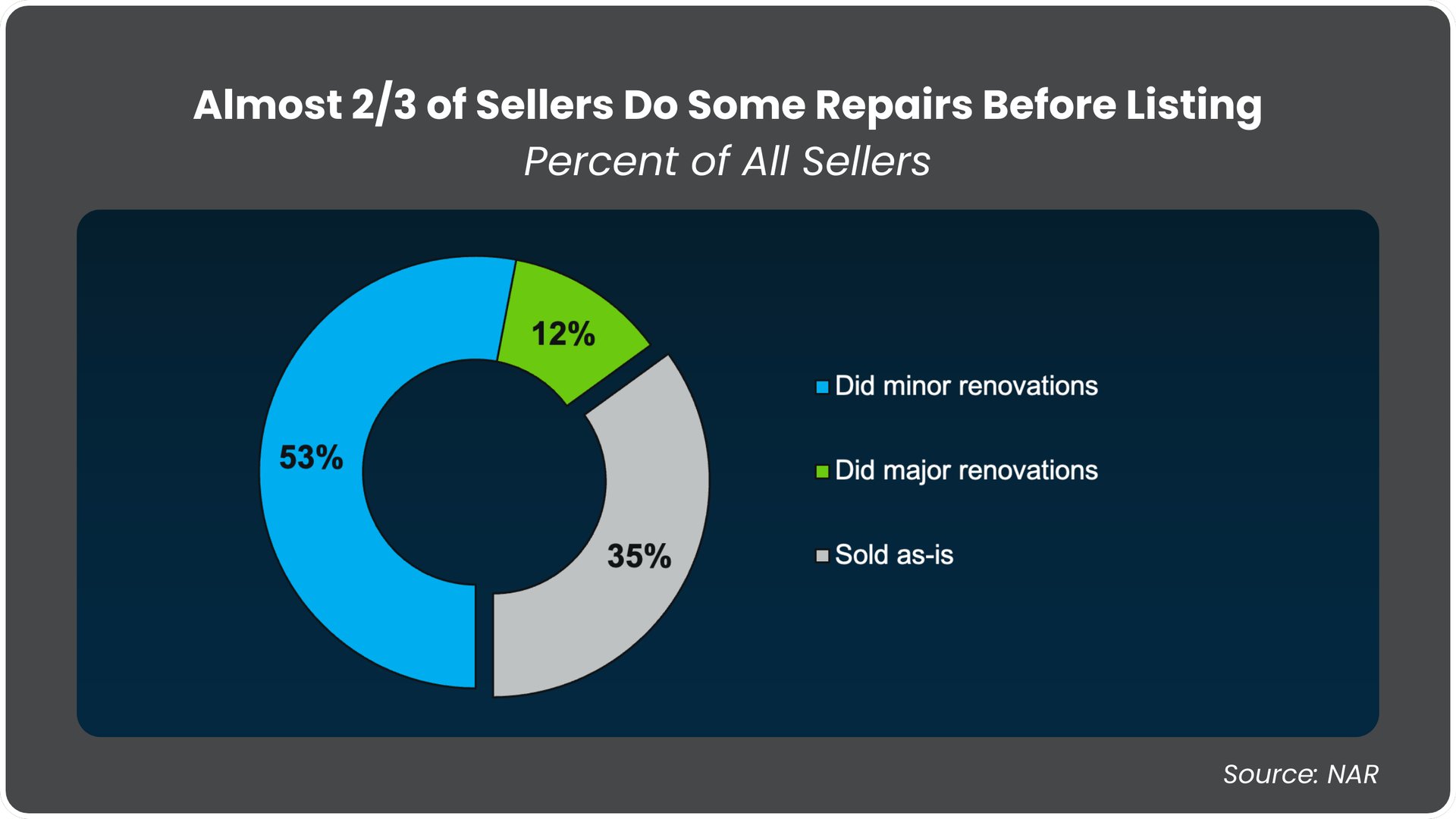
Some sellers still choose as-is — but now it’s less common. Roughly two-thirds of sellers make some updates before listing; only about one-third opt for pure as-is sales.
In a shifting market, condition is one of the few levers that still influences price, speed, and buyer competitiveness — even if you don’t want to spend on renovations.
The Trade-offs You Don’t See on IG
Most homeowners fall into one of two camps:
1. “I want simplicity — no repairs, no delays.”
Selling as-is can be smart when:
-
You don’t have the budget for costly fixes.
-
You’re under a deadline — relocating, downsizing, or handling an estate.
-
You want to sell quickly with fewer contingencies.
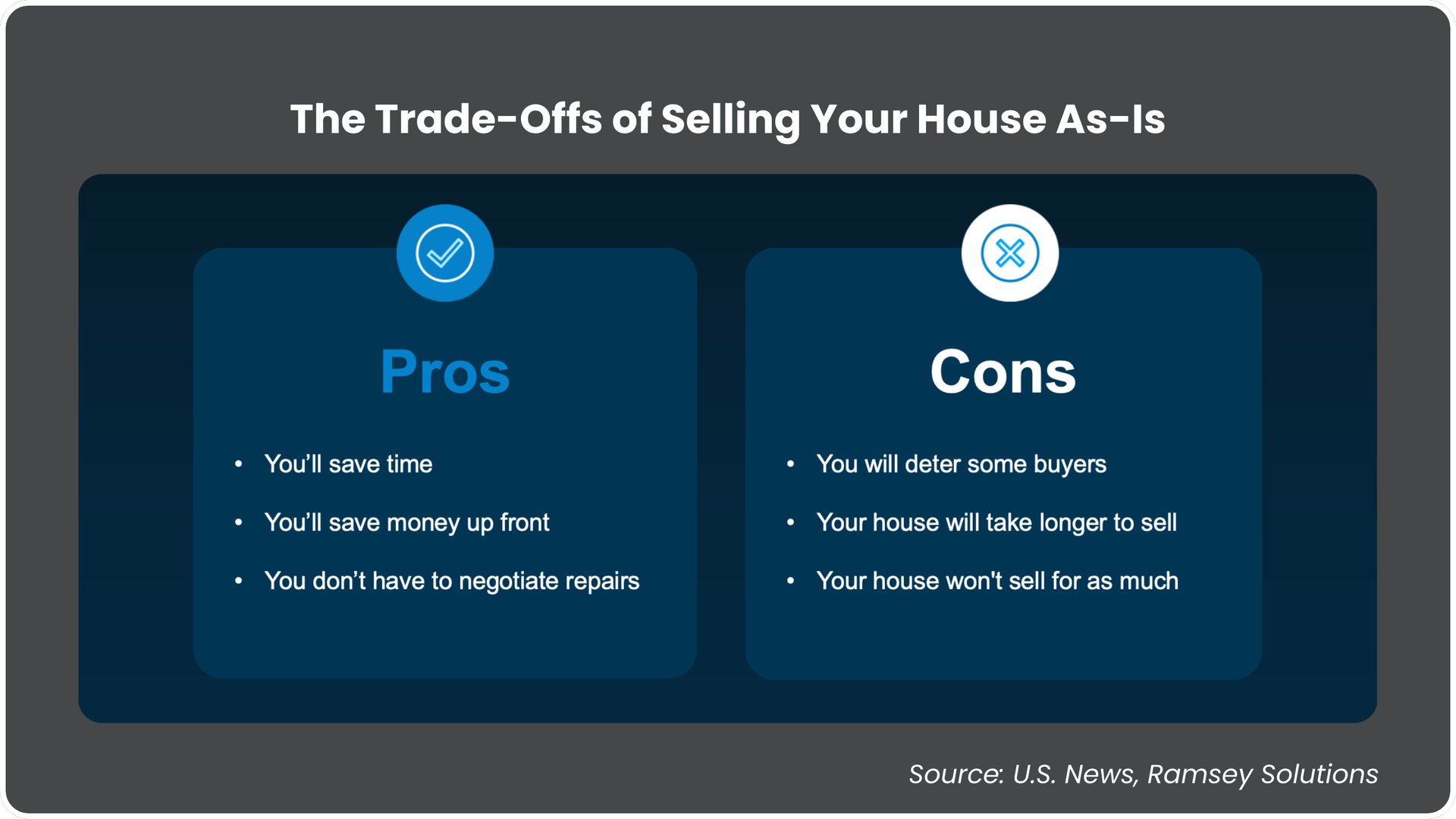
But simplicity often comes with a cost: a more limited buyer pool and typically a lower sale price than if the home were updated.
2. “I want the best return possible.”
Even small updates — thoughtful painting, deep cleaning, or fixing obvious safety concerns — can turn a so-so listing into a move-in-ready one that attracts mainstream buyers and stronger offers.
This isn’t about fluff. It’s about positioning your home to compete in a market where buyers aren’t desperate — they’re discerning.
How an Agent Adds Value in an As-Is Sale
An experienced real estate professional doesn’t just list your home — they help you strategize:
-
What repairs might actually pay off — and which don’t.
-
How to price your home competitively given its condition.
-
How to market to the right buyer audience — investors, fixer-uppers, or traditional buyers open to projects.
Because selling as-is doesn’t mean selling poorly: it means selling smart.
Bottom Line for 2026
Selling your house as-is can make sense — especially if your priority is time, convenience, or minimizing upfront costs.
But let’s be clear:
-
You still need transparency and legal disclosures.
-
Buyers will still evaluate condition and may negotiate.
-
You may get less money, but you may also save time and stress.
So before you flip a label on your home listing, take a breath — and take stock. The choice between as-is and as-prepared isn’t binary; it’s strategic.
Your home is one of your biggest financial decisions — it deserves a plan, not a shortcut.